About the Society
Societas Rosicruciana in Civitatibus Foederatis
The SRICF (Rosicrucian Society of the United States) is an invitational Body composed of highly dedicated Masons who are committed to esoteric and philosophical study. The Masonic Rosicrucian Society is not merely another Degree to be acquired; rather, we are a society seeking Brethren whose interest in our aims is sincere and profound. We prioritize the quality of our fellowship over the quantity of our membership.
The Society in the United States was established on April 21, 1880 by New York and Philadelphia Colleges forming a High Council. Its official consecration occurred on September 21, 1880 in Boston, by four Colleges chartered by the Societas Rosicruciana In Scotia (SRIS). Representatives from each of the four original colleges were present at this meeting: Pennsylvania, New York, Massachusetts, and Maryland1.
| Original College | First Chief Adept |
|---|---|
| Pennsylvania | Charles E. Meyer |
| New York | Albert G. Goodall |
| Massachusetts | Alfred F. Chapman |
| Maryland | Thomas J. Shryock |
On October 7, 1908, Maryland's Thomas J. Shryock was elected Supreme Magus. During his tenure, he updated the High Council's title from the Societas Rosicrucianae Republicae Americae to the Society of Rosicrucians in the USA. In 1934, the High Council officially Latinized the name to its current form: Societas Rosicruciana in Civitatibus Foederatis.
We are a research society whose primary purpose is to enhance the Masonic education of our members, expand their knowledge of the hermetic arts, and provide a better understanding of the world at large.
Membership & Qualification
Membership requires affiliation with a Blue Lodge and a profession of the Christian faith. The Masonic qualification assures us that the Aspirant has given proof of the fidelity and privacy characteristic of the Fraternity. The Christian qualification is essential, as the character of our Grade rituals and the necessary understanding among members are deeply rooted in this faith. While membership in the Scottish or York Rite is not mandatory, many of our members hold dual membership in these bodies.
Structure & Governance
A local body is termed a "College," which confers "Grades" (I° through VII°) rather than Degrees. Advancement to each Grade is based on merit. The Eighth (Magister) and Ninth (Magus) Grades are controlled and conferred solely by the High Council.
A Chief Adept, appointed by the Supreme Magus, presides over the College with the assistance of the Celebrant, the body's highest-ranking elected officer. While each state typically has a single College, membership capacity has evolved over time. Originally capped at 36 members, the limit was doubled to 72 in 1908 by MW Supreme Magus Thomas Shryock.
Maryland College History
Maryland College was chartered on May 10, 1880, as one of the four original colleges that formed the Society in the United States. Its charter was issued to Thomas J. Shryock, who later went on to serve as the Grand Master of Masons in Maryland for 32 years. Unfortunately, the original charter document and early archives are lost. While the High Council in Scotland (S.R.I.S) maintains records of this founding date, all efforts to locate the physical historical records for the Maryland College have been unsuccessful.
Following Shryock's death in February 1918, the charter of Maryland College could not be located but the High Council authorized Charles C. Homer to be the Chief Adept. This authorization was to continue in effect until revoked or until the original charter could be found. Homer died in 1923 and the College became dormant for several decades. Only five members are known from this early era: Thomas Shryock, Charles Homer, Woodward Abrahams, William F. Cochran, and William H. Clark.
The College remained inactive until it was reconstituted in 1981. S. Flory Diehl was appointed Chief Adept during this revival, marking the beginning of the College’s modern era. The Maryland College typically meets four times a year for business meetings, dinner, and paper presentations. Members advance through the grades by submitting and presenting a paper to the College at one of these meetings.
Grade Structure
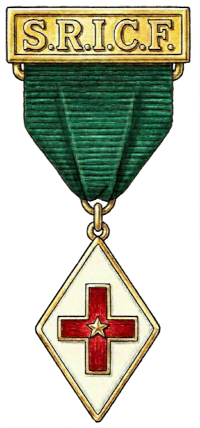
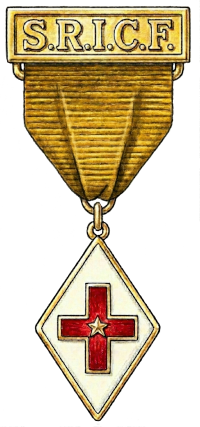
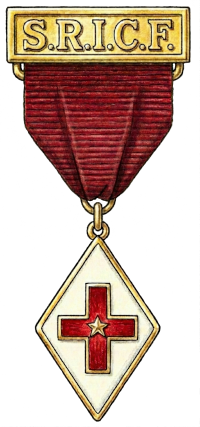
The Grades of the Society are listed below. A local College confers the Grades in the First and Second Orders.
First Order Grades
Classified as the Learning Grades
- I° Zelator
- II° Theoricus
- III° Practicus
- IV° Philosophus
Second Order Grades
Considered the Teaching Grades
- V° Adeptus Minor
- VI° Adeptus Major
- VII° Adeptus Exemptus
Third Order Grades
Conferred only by the High Council, not local Colleges
- VIII° Magister
- IX° Magus
1 Voorhis, Harold Van Buren. A History of Organized Masonic Rosicrucianism: Societas Rosicruciana. 1983 ed. (Summit, N.J., 1982), pp. 45, 52–54.